
Knee Injection in NYC
Advanced, image-guided Knee joint injections by Dr. Sonali Lal, M.D. — Board-Certified Physiatrist with over 20 years of experience in interventional spine and musculoskeletal medicine.

in NYC
Precision Knee Care by a Recognized Expert
I am Dr. Sonali Lal, M.D., a board-certified physiatrist with more than 20 years of experience in musculoskeletal and interventional orthopedic medicine, and I evaluate chronic knee pain through a precision-based, diagnosis-first approach here in Manhattan.
One of the first things I explain to patients is this:
Knee pain is not always arthritis, and it is not always “wear and tear.”
Many patients across New York City come to me frustrated because their knee pain keeps interfering with walking, exercise, stairs, commuting, or everyday movement despite trying rest, medications, braces, or physical therapy.
Some patients tell me:“My knee hurts every time I walk downstairs.”
Others say:
“I stopped exercising because the pain keeps coming back.”
The knee is one of the hardest-working joints in the body. It absorbs force, supports balance, and allows us to walk, squat, stand, climb stairs, and stay active. When pain becomes persistent, even everyday activities can begin feeling limiting.
Patients commonly seek treatment for:
A knee injection is one of the treatments I may recommend when inflammation, joint irritation, tendon dysfunction, or chronic pain continues interfering with movement and quality of life.
What I want my patients to understand is this. A knee injection is not simply about temporarily covering pain. My goal is understanding what structure is truly causing symptoms, reducing inflammation when appropriate, and helping restore long-term mobility and function.
I evaluate patients across NYC at my Manhattan clinic using advanced musculoskeletal and interventional orthopedic expertise to identify the true cause of chronic knee pain.
— Dr. Sonali Lal, M.D.
I explain to my patients that knee pain is frequently misunderstood and often involves more than one structure.
One of the most common assumptions I hear is: “It must be arthritis.” Sometimes that is true. But not always.
The knee contains:
Pain may come from one structure or several contributing together.
During evaluation, I often assess for:
Patients commonly describe: “Pain every time I stand up.” Others explain: “My knee swells after walking or exercise.”
Persistent knee pain deserves a careful explanation rather than assumptions. The most important step is identifying what structure is actually responsible for symptoms.
I carefully evaluate chronic knee pain at my Manhattan practice because persistent symptoms deserve precise answers rather than generalized treatment.
— Dr. Sonali Lal, M.D.
Evaluating Your Condition
Before recommending a knee injection, I carefully determine whether it is truly the right treatment for your condition. One of the most important conversations I have with patients is this: Not everyone with knee pain needs an injection.
When you sit with me, I evaluate:
I also ask: Does walking worsen symptoms? Are stairs painful? Does the knee lock, buckle, or swell? Does exercise aggravate symptoms? Is stiffness worse in the morning or after activity?
Treatment recommendations vary depending on the diagnosis. For example: Arthritis-related inflammation may require one strategy. Meniscus irritation may require another. Tendon pain often benefits from different approaches. Instability frequently requires rehabilitation alongside treatment.
This is why I do not believe in generalized orthopedic care. Precision begins with diagnosis.
I carefully guide patients through a detailed musculoskeletal evaluation at my Manhattan clinic to determine whether knee injections are appropriate and aligned with long-term recovery goals.
— Dr. Sonali Lal, M.D.How I Match Treatment to Your Condition
I explain that there are different types of knee injections and that treatment should match the condition. Many patients assume an injection is simply: “A shot for knee pain.” That is not how I approach treatment.
Depending on your diagnosis, treatment may include:
Corticosteroid Injections
Platelet-Rich Plasma (PRP)
Regenerative Orthopedic Procedures
Therapeutic Image-Guided Injections
Each option serves a different purpose. For some patients, reducing inflammation becomes the immediate goal. For others, improving tissue healing or reducing chronic irritation becomes more important.
The better question is not: “Can I get an injection?”
The better question is: “What exactly are we treating?”
As a physician specializing in musculoskeletal medicine and regenerative orthopedics, I carefully match treatment to the condition rather than using a one-size-fits-all approach. This individualized decision-making process matters tremendously for long-term outcomes.
I develop personalized knee treatment plans for patients across NYC using advanced musculoskeletal expertise and evidence-based decision making.
— Dr. Sonali Lal, M.D.Why Precision Matters Tremendously
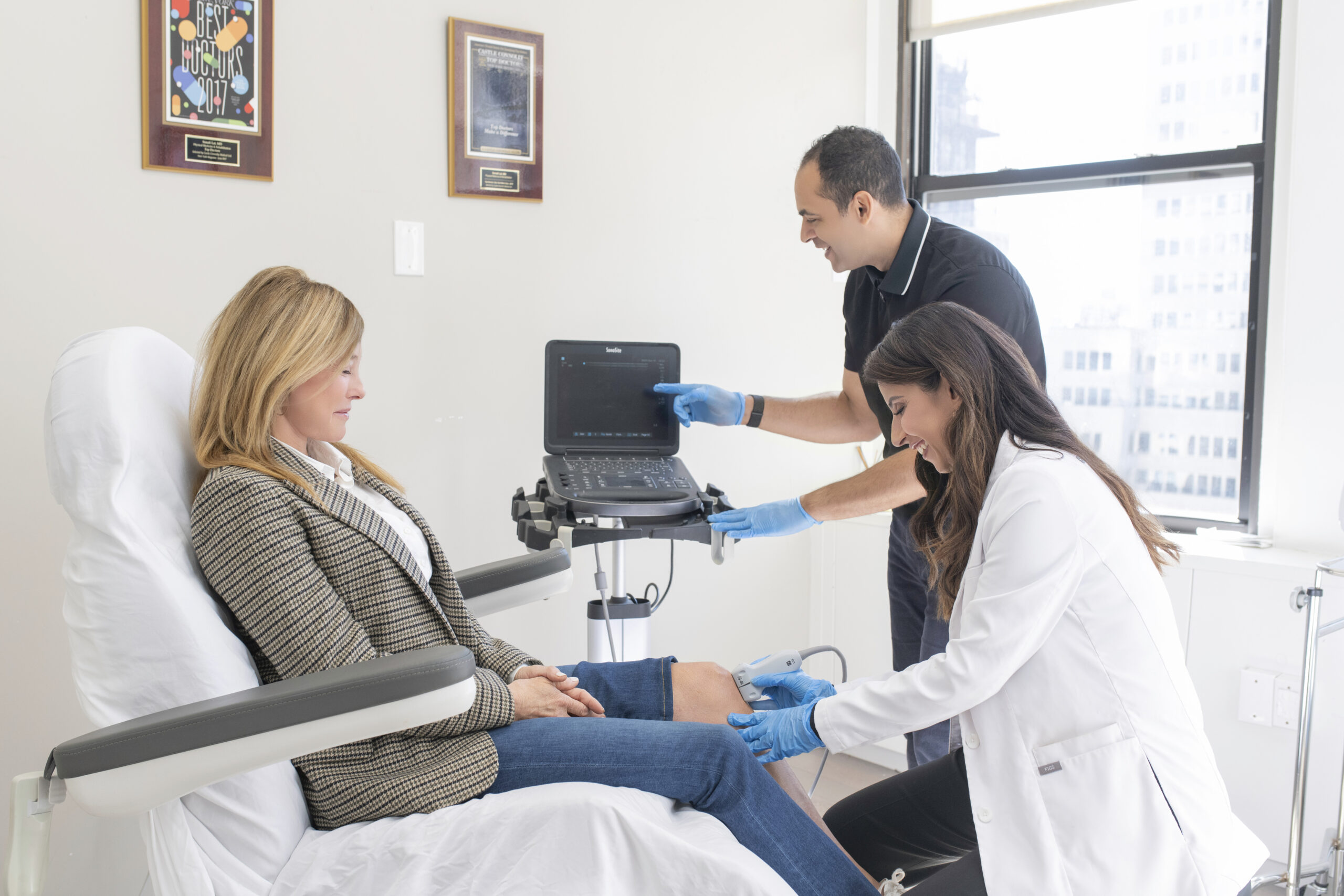
I perform knee injections using advanced image guidance because precision changes outcomes. The knee contains multiple important structures located close together. Treating the correct structure matters tremendously.
When appropriate, I use ultrasound guidance to visualize:
Patients frequently tell me: “I thought injections just went where it hurt.” In reality, anatomical precision significantly improves treatment accuracy.
The goals of image-guided treatment include:
As a physician specializing in image-guided orthopedic care, I focus heavily on safety and individualized care.
I perform advanced knee injections at my Manhattan clinic using image-guided techniques designed to maximize precision and patient safety.
— Dr. Sonali Lal, M.D.
Addressing the Entire Musculoskeletal System
I help patients understand how knee pain affects movement throughout the body. Knee pain rarely stays isolated. When the knee hurts, patients often change how they move without realizing it.
Over time, altered movement patterns may contribute to:
Patients commonly tell me: “I stopped walking as much.” Or: “I avoid stairs now.”
In a city like New York where walking is part of everyday life, knee pain can quickly interfere with quality of life.
My goal is not simply reducing symptoms. It is helping patients move confidently again.
I regularly evaluate movement mechanics at my Manhattan practice because chronic knee dysfunction often affects the entire musculoskeletal system.
— Dr. Sonali Lal, M.D.Emphasizing Lasting Knee Mobility & Function
I emphasize rehabilitation and long-term recovery rather than relying on injections alone. An injection may reduce inflammation or improve symptoms, but long-term improvement depends on addressing the reason symptoms developed.
Depending on your condition, treatment may include:
For many patients across NYC, movement corrections and strengthening dramatically improve long-term outcomes.
I create individualized recovery plans at my Manhattan clinic designed to support both symptom improvement and long-term knee health.
— Dr. Sonali Lal, M.D.Recognized Expertise & Academic Leadership
I bring recognized expertise, academic leadership, and patient-centered orthopedic care to knee treatment in NYC. With more than 20 years of experience in musculoskeletal medicine and interventional orthopedics, I have helped patients across New York City recover from chronic knee pain using precise, minimally invasive treatment approaches.
Patients trust my approach because it is thoughtful, evidence-based, individualized, and focused on restoring long-term movement and quality of life.
I bring my full clinical expertise and dedication to patient care to every person I evaluate at my Manhattan practice.
— Dr. Sonali Lal, M.D.Board-Certified Physiatrist
Certified specialist in physical medicine and rehabilitation
Attending Physician
NewYork–Presbyterian Hospital
Assistant Clinical Professor
Columbia University
Castle Connolly Best Doctors in NYC
Recognized among top physicians in New York City
Best Woman in Medicine
National recognition for excellence in medicine
Published & Featured
The New York Times, New York Magazine, published author in interventional orthopedics
Upper West Side, Manhattan
Conveniently located at 240 West 73rd Street, serving patients across all of NYC
Hear From Our Patients
Real experiences from patients treated at our Upper West Side clinic.
What Our Patients Say


Common Questions About Knee Injections
Knee injections may help arthritis, tendon irritation, inflammation, swelling, meniscus-related pain, and chronic knee discomfort depending on the diagnosis.
I regularly evaluate patients at my Manhattan clinic experiencing chronic knee pain and mobility limitations.
— Dr. Sonali Lal, M.D.Most patients tolerate knee injections very well. Mild soreness afterward is possible but typically temporary.
I use careful, image-guided technique at my Manhattan clinic to maximize patient comfort and precision.
— Dr. Sonali Lal, M.D.The answer depends on what structure is causing pain. Some patients improve with therapy alone, while others benefit from targeted injection treatment.
I carefully evaluate whether knee injections are appropriate based on your diagnosis, symptoms, and long-term recovery goals.
— Dr. Sonali Lal, M.D.In some patients, targeted treatment combined with rehabilitation may help delay or avoid surgery.
I focus on advanced, non-surgical orthopedic care at my Manhattan clinic whenever appropriate.
— Dr. Sonali Lal, M.D.Schedule Your Consultation
Contact us today to schedule your evaluation at our Upper West Side clinic. Dr. Sonali Lal, M.D. will personally review your case and create an individualized treatment plan to address your chronic knee pain.
New York, NY 10023
Request an Appointment
Fill out the form below and our team will be in touch shortly.